A capitalization rate (cap rate) is a financial ratio used to estimate the potential
return on an investment in real estate. It is calculated by dividing the net operating
income (NOI) of a property by its market value.
The cap rate is an important factor in real estate investing, as it can help investors
compare different properties and assess the risk and potential return of an
investment. In general, a higher cap rate indicates a higher risk and return, while a
lower cap rate indicates lower risk and return.
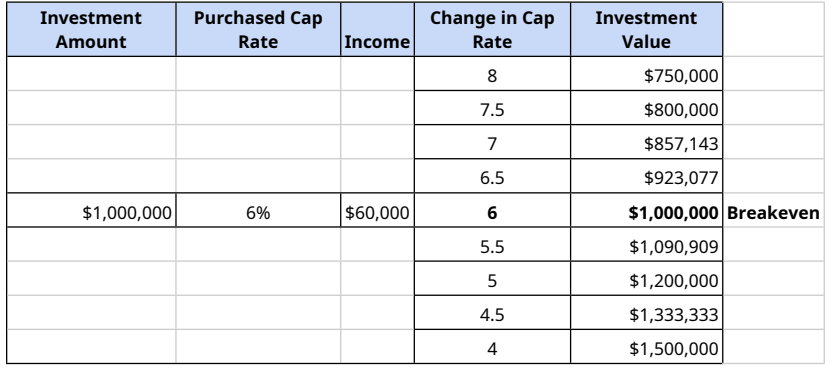
When cap rates change, it can have a significant impact on the value of real estate.
For example, if cap rates increase, the value of properties will decrease. This is
because investors will be less willing to pay as much for a property if the expected
return is lower. See the chart at the end of this article for effects of changes in cap
rates.
Cap rates are a complex and dynamic metric, and their impact on real estate can
vary depending on a number of factors. However, they are an important tool for
real estate investors and can be used to help make informed investment decisions.
Overall, cap rates are a useful tool for understanding the potential return on
investment in real estate. However, they should not be used as the sole factor in
making investment decisions.
Please contact me if you have any questions regarding investing in passive real
estate, 1031 exchanges or cap rates.